
Tech
Why You Should Consider a Used or Refurbished Transformer

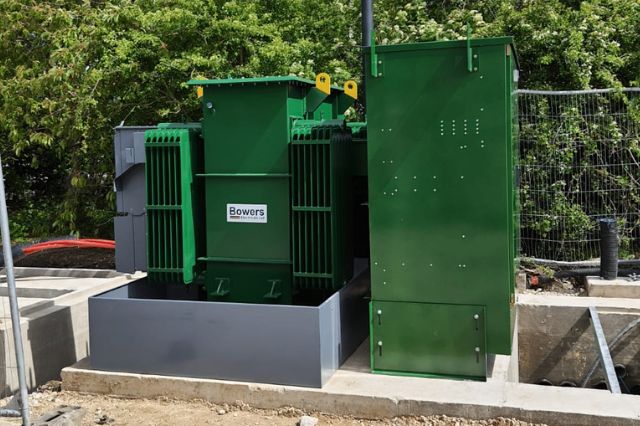
In case you didn’t know, there is a shortage of transformers being caused by a shortage of raw materials. As a result, lead times for obtaining a new transformer are long.
It can take from 30 weeks to well over a year to acquire a new dry type transformer, so if you happen to need one, it’s recommended to buy one as soon as possible.
However, even if you order one now, you’ll still have to wait a while for it to arrive. In the meantime, you might want to consider buying a used or refurbished transformer. You can always resell it when your new transformer arrives.
If you’ve never looked into used and refurbished transformers, here’s why you should make this consideration.
Used transformers can be obtained quickly
If speed is essential for you to get moving, then buying a used transformer will help you get what you need fast. You might not be able to find exactly what you want, but that’s okay because at least you’ll have something while you look for or order the transformer you really want.
Utility companies across the United States are running out of transformers, and even they are having to wait to get new ones. If you can’t wait for your local utility company to get a transformer for you, you’ll have to source it yourself.
If you happen to be under any kind of pressure to install a transformer, time is of the essence, and you’ll be surprised at just how much a used transformer can help.
Used and refurbished transformers are cost-effective
Reports say that new transformers have risen in price by close to five times what they were prior to the shortage, and that’s going to put a dent in your bank account. However, when you buy a used or refurbished transformer, you’ll pay significantly less.
Refurbished transformers can be as good as new
Depending on what manufacturer you buy a refurbished transformer from, it could be as good as new. It all depends on the craftsmanship provided by the manufacturer. Some people don’t refurbish units properly or thoroughly, and others use cheap materials, like thin insulation that wears out too quickly. You want to avoid this situation at all costs because that will only make your transformer fail.
To get a dependable refurbished transformer, research the company you’re considering buying from to make sure they use the right materials and processes to restore their units to fully functioning, long-lasting transformers.
The downside to buying used transformers
Although a reputable manufacturer can refurbish a transformer and make it work like new, the same can’t be said for a used transformer. When you buy used, it’s a gamble and you never know what you’ll get until you have it installed and start using it for a while.
That doesn’t mean all used transformers are bad, but you have to consider why someone would sell a transformer in the first place, especially during a shortage. It’s possible and even likely that most people selling at this time have simply bought a replacement that is an upgrade, but that still means you’ll be getting an older unit.
Even when someone is selling it for honest reasons, you can’t guarantee it will work perfectly for any length of time. And if you don’t open it up to see how it’s insulated, you could end up with an exploded transformer when you least expect.
The downside to buying refurbished transformers
Unlike used transformers, refurbished units aren’t as much of a gamble, but there is a downside. If you have to spend several thousands of dollars on a refurbished transformer, that’s several thousand dollars less that you have to spend on a new transformer when one becomes available.
If you happen to have the extra cash available, get a refurbished unit to use until your new transformer arrives. Then you can sell the refurbished one and recover some of your costs. However, if you don’t have that extra cash flow, then you might be stuck using a refurbished one long-term.
That may or may not turn out well for you, so this is why it’s crucial to always buy from a reputable manufacturer who goes the extra mile to ensure their refurbished units are properly restored.
Don’t put off buying a transformer
If you need a transformer now, don’t put it off by holding out for a new one. If you wait for supply levels to return to normal, you might be waiting a while because experts say the shortage won’t end anytime soon. Get a used or refurbished transformer now, and then sell it after you get the new one you really want.


Substack started life as a way for writers to send paid newsletters to people who actually wanted them. The app that carries the name now does considerably more than deliver email.
Listed under News & Magazines and published under the name Substack Inc., it describes itself as a media app built around creators, ideas, and communities, and the feed reflects that: essays sit next to video episodes, podcasts, short clips, and live group chats.
For anyone who has spent years bouncing between a podcast app, a video platform, and an inbox full of half-read newsletters, the appeal is the consolidation. One place, one list of subscriptions, one set of notifications.
Beyond the newsletter
The core unit on Substack is still a publication, and behind each one is an independent writer, artist, or podcaster rather than an editorial board. That structure shapes what you find. The catalogue spans food, sports, politics, fashion, comedy, and finance, and the tone tends to be more opinionated than what a general news app serves up, because there is no house style to conform to.
Some publications are text-first with an occasional audio version. Others are video shows first, with written notes attached almost as an afterthought. Serialized writing does well here too, with fiction and long-running project diaries arriving in installments the way a column once did.
Free and paid tiers
Subscriptions come in two flavours. You can follow a publication for free and read whatever the creator makes public, or pay to read the subscriber-only work and, in most cases, get access to comment threads and direct contact with the writer.
That paid layer is the whole economic engine of the platform, which is why creators talk about it so much. From a reader’s side it means the decision is per publication, not per platform. You can carry a dozen free follows and one paid subscription without any of the bundling that streaming services push.
The app also keeps videos and podcasts ad-free, including read-aloud versions of articles, which is a meaningful difference if your podcast queue currently opens with ninety seconds of mattress commercials.
When writers go live
The live features are the part people tend to underestimate. Creators host livestreams and live group chats, usually for subscribers, and these are closer to a call-in radio show than a comment section. A finance writer walking through a market selloff in real time, or a comedy podcaster taking questions after an episode, works better as an event than as a post.
Chat threads sit somewhere between a forum and a group message. They stay attached to a publication, so the conversation tends to keep its shape instead of drifting the way open social feeds do.
Substack on Windows
Because so much of the reading here is long, a desktop screen suits the material. Substack is an Android app rather than a Windows program, so running it on a PC means using an Android emulator such as BlueStacks. Some people prefer LDPlayer for its lighter footprint, though either approach puts the same mobile app in a resizable window next to your browser.
Two things tend to trip people up. Audio playback in an emulator can behave oddly if the virtual machine grabs the wrong output device, which matters when a large share of what you consume is podcasts and read-aloud posts. Livestreams also want a stable connection and hardware acceleration turned on, or video will stutter while the chat keeps scrolling.
If either of those snags hits, or you just want to confirm things run cleanly before committing to a paid subscription you plan to read at your desk, Substack for Windows walks through fixing the audio routing problem and getting the Android build running in a desktop window. Signing in with the same account you use on your phone keeps your subscription list and reading position in sync.
Settling in as a subscriber
Notifications are the setting worth visiting first. A dozen active follows across text, audio, and live events will generate a lot of pings, and the per-publication controls are more useful than the global toggle.
Downloading audio for offline listening is handy on a phone and less so on a desktop, though it does mean an episode keeps playing if your connection drops mid-stream. Search rewards specificity: browsing by category surfaces the big names, while searching a niche subject tends to turn up the smaller publications that made the platform interesting in the first place.
If you do subscribe to a finance writer, keep the livestream schedule handy. Watching someone talk through a selloff as it happens is a different experience from reading the recap the next morning.

Local-language input is one of those problems that looks solved until you need it. Latin-script languages get keyboard support by default on every operating system, but scripts like Sinhala sit in an awkward middle ground: the fonts render fine, Unicode support exists, yet the act of typing remains clumsy without software built for the language rather than bolted onto it.
People in this space usually reach for one of three things. A transliteration tool that turns romanized text into the target script, a system-level keyboard layout that assumes you already know where every character lives, or a browser-based converter you paste into and copy out of. Each works. Each also breaks the moment you want to type a quick reply without switching contexts.
That gap is where dedicated local-language keyboard apps have carved out real user bases, and in Sri Lanka the clearest example is Helakuru.
Four million daily typists and a trophy shelf
Helakuru (හෙළකුරු) is listed under Lifestyle rather than Tools, which sounds odd for a keyboard until you look at the scale involved. The app describes itself as Sri Lanka’s number one app with over four million users, and its award list backs up the reach: Most Popular App of Sri Lanka at the NYDB Awards 2016, the mBillionth South Asian Award in 2014, an e-Swabhimani National Award in 2013, an NBQSA National Award in 2014, and Sri Lanka’s Best Local Language Product Award the same year.
Awards age quickly. The user number is the more telling figure, because keyboards live or die on daily habit. Four million people typing in Sinhala natively from their phones means the input model works well enough that nobody has to think about it.
Published under the name Bhasha, the app’s core idea is simple: give Sinhala speakers a keyboard that behaves like a modern smartphone keyboard instead of a workaround.
Smart Phonetic vs Smart Wijesekara
Helakuru supports two Sinhala layouts, and the choice matters more than it might sound.
Smart Phonetic works the way most bilingual typists think. You type Sinhala sounds using Latin characters and the app resolves them into Sinhala script as you go. It has almost no learning curve for anyone who already types English on a phone.
Smart Wijesekara is the digital form of the traditional Sinhala typewriter layout, the one used by trained typists and people who came up through offices and print. Muscle memory built over years transfers directly, which is exactly why the layout still exists.
Word prediction runs on top of both, and it covers English as well as Sinhala. Voice typing is available for both languages too, which is useful for longer messages where thumb-typing a complex script slows you down.
The practical result is that switching between Sinhala and English mid-sentence, which is how a lot of everyday Sri Lankan messaging reads, stops being a chore.
Helakuru for PC
Phones are where Helakuru was designed to live, and there is no official desktop build. That has not stopped people from wanting it on a bigger screen, usually for the same handful of reasons: writing longer Sinhala documents, handling social media accounts, preparing captions and posts, or working through a backlog of messages with a full-size keyboard in front of them.
The route to that is an Android emulator, and guides that walk through how to download Helakuru Sinhala Keyboard for PC generally follow the same broad shape regardless of which emulator you pick.
Emulator setup
The general process looks like this:
- Install an Android emulator on Windows and let it complete its first boot, which can take several minutes.
- Sign in with a Google account inside the emulator so its app store works normally.
- Search the store for Helakuru and install it the way you would on a phone.
- Open Android settings inside the emulator, enable Helakuru under languages and input, then set it as the active keyboard.
- Open any text field in the emulator to confirm the keyboard appears and the layout you chose is active.
Enabling the keyboard at the system level is the step people miss. Installing the app alone does nothing visible, because Android treats input methods as something you explicitly switch on.
The tradeoffs of running a phone keyboard on Windows
Running a phone keyboard inside a desktop window changes a few things:
- Your physical keyboard usually types straight into the emulator, which can bypass the on-screen Sinhala keyboard entirely unless you disable hardware input for that app.
- Text you produce lives inside the emulator’s Android environment, so moving it to Windows means using the emulator’s clipboard sharing or a shared folder.
- Voice typing depends on the emulator passing your PC microphone through, and that permission has to be granted on both sides.
- Performance is tied to virtualization support being enabled in your BIOS, which is the usual cause of a sluggish emulator.
None of this is exotic, but it explains why an emulated keyboard feels different from a native one. You are running a full Android system to host a single input method.
For someone drafting a long Sinhala post, that tradeoff is often fine. Smart Wijesekara on a real keyboard, with prediction filling in the rest, is close to the experience trained typists already know, and it beats pasting text through a browser converter every few lines.

When people picture a data center, they picture the glow. Rows of blinking servers, neat cabling, the hum of something important. What they almost never picture is the floor underneath it all. And yet the floor is often what decides whether the room stays alive or cooks itself into a very expensive paperweight.
The AI boom has turned up the volume on this question. More power in, more heat out, more pressure on every square foot. So what’s happening beneath the servers that keep your apps, your inbox, and your streaming queue running?
The Room Is a Machine, and the Floor Is Part of It
A data center isn’t a warehouse full of computers. It’s one giant machine with a lot of moving parts, and airflow is one of them.
Heat is the enemy of anything with a circuit board, and servers throw off plenty of it. Pull that heat away efficiently and the equipment lives longer. Fail, and things get expensive fast.
That’s where the raised floor comes in. It’s a modular platform sitting above the structural slab, creating a plenum, a hidden air highway, underneath the room.
Cold air pushes up through perforated tiles right in front of server intakes, and the same hidden space carries cables, power runs, and water lines. The room looks tidy on top because the mess lives below.
The temperature rules aren’t arbitrary either. ASHRAE guidance recommends server inlet temperatures between 18°C and 27°C for reliable operation and reasonable energy use. Hit that window consistently and your gear behaves. Miss it, and you pay twice, once in power and once in shortened hardware life.
Small Temperature Choices, Big Money Consequences
Cooling isn’t a rounding error on the utility bill. At efficient hyperscale sites it can be a modest slice of total consumption, but at less-tuned enterprise facilities it can balloon into a much larger share. That spread is the difference between a well-tuned airflow strategy and one that leaks cold air into empty corners.
The setpoint matters more than most operators assume. Nudging the inlet temperature up a degree or two, when the equipment tolerates it, translates into meaningful cuts in cooling energy. Multiply that across a room running around the clock and the savings show up fast on the P&L.
The catch: you can’t safely raise setpoints if you don’t know what temperature the servers are seeing. In raised-floor rooms, air near the ceiling can run 5 to 10°C warmer than air near the floor. Sensor placement, containment, and tile layout stop being cosmetic and start being financial.
What the AI Wave Is Actually Doing to the Room
The demand curve has bent. Global data center electricity use is projected to roughly double to around 945 TWh by 2030, growing more than four times faster than overall electricity demand. That’s not a rounding error. That’s a new utility.
Rack density is climbing to match. Uptime Institute’s 2024 global survey pegged average typical rack density at 8 kW, with some sites already reporting racks above 50 kW. The same survey put the industry-average PUE at 1.56, a number that has stubbornly refused to move for years.
Here’s the honest tension.
Traditional under-floor air distribution starts to strain once you push into the 8 to 10 kW per rack range and up. That doesn’t kill the raised floor. It changes its job.
In modern builds, the space beneath the tiles is increasingly a service corridor for liquid cooling lines, high-amperage power, and structured cabling, not merely an air duct. Well-designed data center flooring systems are being reengineered around that reality: higher load ratings, better grommet sealing, panels that swap out without dropping a row, etc.
How Smart Operators Are Thinking About the Floor
The mindset shift is subtle but real. Most teams still picture the floor as a passive surface; in practice, it’s an active piece of infrastructure that either helps the room hit its efficiency and reliability numbers or erodes them without anyone noticing.
- Seal the leaks. Every unsealed cable cutout is a slow bleed of conditioned air. Grommets and brush seals pay for themselves in months, not years.
- Match tile to load. Perforated tiles belong in front of active racks, not scattered by habit. The airflow map should match the heat map.
- Plan for change. Racks get denser, workloads move, hardware refreshes. Panels rated for higher loads and easy lift-out save future headaches.
- Measure at the inlet. Ceiling and return-air readings hide problems. Sensors at server intakes tell you what the equipment is breathing.
The Boring Layer That Keeps the Interesting Layer Working
There’s a broader lesson here for anyone running a business, not only a facility. The parts of an operation that never show up in the pitch deck (plumbing, flooring, airflow) often decide whether the flashier stuff works at all. Founders who obsess over the visible surface and skip the substrate tend to pay for it later, usually at the worst moment.
Content strategy works the same way. Marketers who chase the shiny top layer, the campaigns, the launches, without doing the substrate work of niche audience research, tend to see the same flat returns operators see when they neglect airflow. The interesting layer only performs if the boring layer is right.
So the next time you scroll past a slick product demo or a cloud service that magically scales, spare a thought for the floor beneath it. It’s holding up more than servers. It’s holding up the whole illusion that this stuff runs itself.

Why “One Less Thing to Think About” Is an Underrated Luxury

Why Football Fans Never Forget an Underdog Win

The Hidden Admin Load Reshaping Healthcare Burnout in 2026

The Cost of Deferred Maintenance: How Small Building Problems Become Big Business Expenses

The Cleaning Decisions That Shape Focus, Mood, and Sick Days at Work

The Sticky House Problem: Why Your AC Cools the Air but Leaves the Room Feeling Damp

Why “Good Enough” Is a Skill: How Precision Thinking Improves Everyday Decisions

Substack on Windows: following writers, podcasts, and livestreams

When AI Answers the Sponsorship Question Before Fans Ever Click

From Prediction to Kick-Off: What Sports Fans Check Before a Big Match

What Happens After You’re Arrested For Driving While Intoxicated?

10 Reasons LEGO is Worth Getting into as an Adult

Actionable SWOT: How to Turn Your Strategic Analysis into a Functional Work Plan

Four Ways to Reduce Risk in Your Technology Supply Chain

What to Do When Everyday Movements Become Painful

So You’ve Got Multiple Offers for Your Business. Now What?

What Is the Construction Process Behind Modern Wind Power Plants?

How to Recover Faster From Everyday Injuries

How to Identify and Eliminate Efficiency Gaps in Complex Business Operations

Top Ways to Ask for Help

 Business12 months ago
Do You Really Need Those Extra Features? Here’s How to Decide for Your Business

 Health12 months ago
The Power of Prevention in Modern Medicine

 Entertainment10 months ago
Casino Bonuses in Latvia: Comparing Offers and Tips for Beginners

 Tech12 months ago
Your Guide to Protecting Your Digital Peace of Mind

 LifeStyle10 months ago
Why Support Systems Matter More Than We Admit During Hard Times

 LifeStyle8 months ago
Should You Buy or Build Your Next Home? Here’s How to Decide (Without Losing Sleep Over It)

 Work11 months ago
How to Create a Comfortable Environment for Your Team

 Health10 months ago
The Support Systems That Keep Independent Practices Competitive