
Beauty
Modern Smile Makeovers: Finding the Right Option for Your Budget and Goals

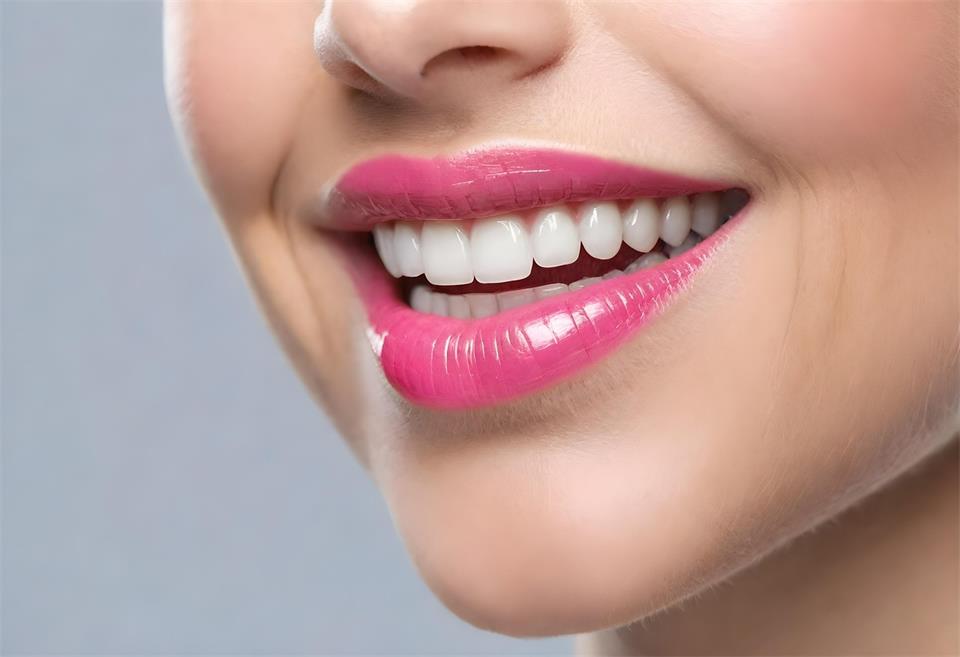
Getting the smile you’ve always wanted doesn’t have to mean emptying your savings account or settling for less than what you really want. The cosmetic dentistry world has changed a lot over the past decade, and there are more options now than ever before.
Whether you’re dealing with stained teeth, gaps, chips, or just want a completely different look, there’s probably a solution that fits both your vision and your budget.
The thing is, most people don’t realize how many paths lead to the same destination. Someone might achieve their dream smile with veneers, while another person gets identical results with bonding or crowns.
The cost difference between these approaches can be thousands of pounds, but the end result looks virtually the same to anyone who’s not a dentist. Understanding what each option actually does (and what it costs) makes all the difference when you’re trying to make a smart choice.
What Actually Counts as a Smile Makeover
A smile makeover is basically any combination of dental procedures that changes how your teeth look. That could be as simple as professional whitening, or as involved as a full mouth reconstruction with implants and crowns. Most people fall somewhere in the middle, combining two or three treatments to get the look they want.
The most common smile makeover procedures include whitening, bonding, veneers (both composite and porcelain), crowns, and orthodontics. Some people also need gum contouring if their gum line is uneven, or implants if they’re replacing missing teeth. The right combination depends on what you’re starting with and where you want to end up.
The Budget-Friendly Approaches That Still Deliver
Professional whitening is usually the first step for anyone wanting to improve their smile, and it’s one of the most affordable options out there. Most dental practices offer both in-office treatments and take-home kits with custom trays. The in-office version gives you immediate results, while the take-home option costs less but takes a few weeks to reach full brightness.
Composite bonding has become really popular in the past few years because it can fix so many issues without breaking the bank. Dentists use tooth-colored resin to reshape teeth, fill gaps, cover stains, and repair chips.
The whole thing usually happens in one appointment, and it costs a fraction of what veneers run. The trade-off is that bonding doesn’t last as long as porcelain (usually five to seven years instead of ten to fifteen), and it can stain over time if you drink a lot of coffee or red wine.
For people who want straighter teeth but can’t justify the cost of traditional braces, clear aligners have become much more accessible. Several companies now offer remote treatment plans that cost significantly less than Invisalign, though they work best for mild to moderate alignment issues rather than complex bite problems.
When It Makes Sense to Invest More
Porcelain veneers are the gold standard for smile makeovers, and there’s a reason celebrities and influencers love them. They’re incredibly durable, stain-resistant, and they can transform your entire smile in just two appointments. The main downside is the cost, which typically runs between £500 and £1,000 per tooth depending on where you live.
The thing about veneers is they’re a long-term investment. If you take care of them properly, they can last fifteen years or more. That works out to a pretty reasonable annual cost when you break it down, especially considering how much they improve both appearance and confidence. Most people who get veneers say they wish they’d done it sooner.
Dental implants are another area where spending more upfront usually pays off. A quality implant can last a lifetime with proper care, while cheaper alternatives might need replacement after ten or fifteen years. The initial surgery and crown placement is expensive (usually £2,000 to £3,000 per tooth), but the long-term value often makes it worthwhile compared to bridges or dentures.
The Dental Tourism Question
Dental tourism has become a major topic in the smile makeover conversation, particularly with the rise of social media showing dramatic transformations. Thousands of people now travel abroad each year for cosmetic dental work, with Turkey being one of the most popular destinations. The cost savings can be substantial, with full smile makeovers running 60-70% less than UK prices.
The turkey teeth phenomenon has brought both opportunities and challenges to light. On one hand, it’s made extensive cosmetic dental work accessible to people who couldn’t otherwise afford it. On the other hand, the distance and language barriers can complicate things if problems arise after treatment.
For anyone considering dental tourism, research is absolutely critical. Look for clinics with international accreditation, check reviews from multiple sources, and make sure there’s a clear plan for follow-up care once you’re back home.
It’s also worth finding out whether your local dentist would be willing to handle any adjustments or issues that might come up, since not all UK practices will work on dental work completed abroad.
Combining Treatments for the Best Results
Most successful smile makeovers involve a combination of procedures rather than relying on just one treatment. A typical plan might start with whitening to brighten the overall smile, followed by bonding or veneers on the front teeth that show most when you smile, and possibly some orthodontic work to improve alignment first.
The key is working with a dentist who takes time to understand what you actually want. Some people are after a completely different look with perfectly white, perfectly aligned teeth. Others want subtle improvements that enhance their natural smile without making it obvious they’ve had work done. Both approaches are valid, but they require different treatment plans.
Established dental practices such as Portland Street Dental Care can assess a patient’s oral health and recommend suitable cosmetic treatments, including teeth whitening, veneers and orthodontics, based on their individual needs.
Making Your Budget Work
If the upfront cost of a smile makeover feels overwhelming, payment plans have become standard at most dental practices. Many offer interest-free financing for twelve months or longer, which can make a £5,000 treatment feel more manageable at £400 per month. Some practices also work with third-party financing companies that offer longer terms, though these usually include interest.
Another approach is tackling your smile makeover in phases. Start with the treatments that will make the biggest impact, then add other procedures as your budget allows. For example, you might do veneers on your top front six teeth first, then complete the bottom teeth six months later. The results aren’t instant, but you’re still making steady progress toward your goal.
The Bottom Line on Smile Makeovers
There’s never been a better time to pursue cosmetic dental work. Whether you’re working with a tight budget or ready to invest in premium treatments, options exist that can help you achieve the smile you’ve been wanting. The important thing is doing your research, choosing a qualified professional, and making decisions based on both your goals and your financial reality.
Your smile is one of the first things people notice, and feeling confident about it affects everything from job interviews to dating to just feeling good in photos. Whatever path you choose to get there, the investment in yourself is usually worth it.


Cosmetic surgery can change a particular feature of your appearance, but it can’t guarantee perfection. That’s an important distinction to understand before deciding whether a procedure is right for you.
Good preparation starts with knowing what a procedure can realistically achieve, what recovery involves and what risks come with it.
Whether you’re considering consulting a plastic surgeon Perth patients can see or a suitably qualified surgeon elsewhere, the consultation should be an opportunity to discuss limitations as well as potential outcomes.
Going into surgery with realistic expectations doesn’t mean expecting a poor result. It means understanding that bodies vary, healing takes time and even carefully performed procedures have limitations.
Be Specific About What You Want to Change
“I want to look better” is understandable, but it’s difficult to translate into a realistic surgical goal.
Try to identify the particular feature that concerns you and what you hope will be different afterwards.
For example, someone considering eyelid surgery might be concerned about excess skin rather than wanting their entire face to look younger. Someone considering breast surgery may have concerns about size, shape or asymmetry.
Being specific helps you have a more useful discussion with your surgeon about whether the procedure you’re considering actually addresses your concern.
Don’t Expect to Look Exactly Like Someone Else
Photographs can be useful for explaining preferences, but another person’s appearance shouldn’t be treated as a guaranteed template.
Your underlying anatomy, skin, proportions and other physical characteristics influence what can realistically be achieved.
Even photographs of previous patients need context. Before-and-after images can help you understand the type of work a surgeon performs, but another patient’s result doesn’t predict exactly how your body will respond.
A useful consultation should focus on what’s achievable for you rather than promising to reproduce someone else’s appearance.
Understand That Recovery Is Part of the Procedure
It’s easy to focus on the eventual result and underestimate what happens between surgery and getting there.
Depending on the procedure, recovery can involve swelling, bruising, discomfort, restrictions on activity and time away from work or normal routines. The area may also look quite different during early healing than it will once recovery has progressed.
Ask your surgeon practical questions such as:
- How much time might I need away from work?
- When can I drive again?
- When can I exercise?
- What assistance might I need at home?
- What symptoms are expected during recovery?
- What symptoms require urgent medical attention?
- When can the result reasonably be assessed?
Plan around the recovery you’re advised to expect, rather than assuming you’ll bounce back immediately.
Talk About Scars
Any procedure involving an incision can result in a scar.
Surgeons may plan incisions with the aim of making scars less noticeable where possible, but scars can’t simply be guaranteed to disappear. How they heal can vary between individuals.
Ask where incisions are expected to be placed, what scars may look like over time and what aftercare is recommended.
This conversation is particularly important if the visibility of a scar would significantly affect how you feel about the result.
Understand the Risks, Not Just the Benefits
Cosmetic surgery is still surgery.
Potential complications vary according to the procedure and individual patient, so the risks should be discussed specifically with your surgeon. These may include problems related to infection, bleeding, anaesthesia, wound healing, scarring, sensation or the final cosmetic result.
You should also understand whether further surgery could ever be required.
A consultation that focuses entirely on benefits without giving you a clear opportunity to understand risks and alternatives should make you cautious.
Remember That Symmetry Has Limits
Human bodies aren’t perfectly symmetrical.
One eyebrow may sit slightly higher than the other. Breasts can naturally differ in size or position. The two sides of the face aren’t exact mirror images.
Surgery may improve particular asymmetries in some circumstances, but expecting mathematically perfect symmetry is usually unrealistic.
Ask what differences are likely to remain after the procedure. Knowing this beforehand can prevent normal variations from becoming disappointing surprises afterwards.
Think About Why You Want the Procedure
This is one of the most useful questions you can ask yourself.
Cosmetic surgery is a personal decision. Ideally, the motivation comes from something you’ve considered carefully rather than pressure from a partner, comments from other people or the belief that changing your appearance will automatically transform unrelated areas of your life.
Give yourself permission to wait if you’re uncertain.
You can attend a consultation, gather information and decide not to proceed. Surgery doesn’t need to be the automatic next step simply because you’ve spoken with a surgeon.
Ask What Happens If the Result Isn’t What You Expected
Before surgery, understand how follow-up care works.
Ask when postoperative appointments occur, who you contact if you’re concerned during recovery and how unexpected outcomes or complications are handled.
It’s also worth understanding the surgeon’s policy regarding revision procedures, including circumstances where additional costs could apply.
These conversations can feel awkward, but they’re much easier to have before making a decision.
Cosmetic surgery should be approached with the same care you would give any significant medical procedure. Take time to understand the likely outcome, limitations, risks, recovery and alternatives, and make sure you have an opportunity to ask questions without feeling rushed.
The goal isn’t to expect perfection. It’s to know what you’re agreeing to and make a decision based on realistic information about what surgery may — and may not — be able to change.

A small change to your face can move the needle on how you feel about yourself far more than the size of the change would suggest. That sounds like an overstatement until you look at how first impressions actually work, how much of daily self-talk is aimed at the mirror, and how narrow the gap often is between the face someone has and the face they wish they had.
The math is smaller than people expect. A softer jawline, a rested-looking eye, a nose that finally matches the rest of the face, and the internal monologue shifts.
The Face Does More Social Work Than You Think
Before you speak, your face has already made an argument on your behalf. In one widely cited set of experiments, Princeton researchers found that people form impressions of a stranger from their face in about a tenth of a second, and giving them longer to look didn’t meaningfully change those judgments.
That’s the social cost of a feature you don’t like, and it isn’t vanity. It’s a signal you send hundreds of times a week, in meetings, on video calls, at school pickup, walking past a mirror.
When something on your face bothers you, the bother compounds. You notice it in every photo. You angle away from cameras, and you stop volunteering for the front row.
Small, Considered Changes Do the Heavy Lifting
What tends to actually work is smaller than most people assume: a subtler version of the face you already have, with the specific thing that bugged you turned down a notch. That could be non-surgical, or it could be a targeted procedure by a board-certified facial plastic surgeon who resists the urge to change more than the patient asked about.
A few markers of the kind of change that tends to translate into a real confidence shift:
- One clear complaint. The best outcomes usually come from patients who can name the specific thing they’d like softened, not a general wish to look better.
- Proportion over trend. Changes that respect the rest of the face tend to age well, while ones chased from a filter usually don’t.
- Reversible first. Injectables, resurfacing, and lifts of the eyelid or brow answer many complaints without committing to anything permanent.
- Honest expectations. You are still going to be you on the other side. The goal is a version of your face you stop arguing with in the mirror.
Where Appearance Work Stops Being the Answer
There’s a real limit to what a procedure can carry. If the discomfort is diffuse, if it jumps between features, or if it’s tangled up with depression or anxiety, changing the face rarely resolves it. The dissatisfaction reattaches to something new. Clinical reviews of psychological risks in aesthetic surgery patients make the same point.
A good clinician will say so and slow the conversation down. That, more than any technique, is what separates a change you’re glad you made from one you keep chasing.

If you’ve ever woken up on a chilly January morning and looked in the mirror, only to see hair that looks a little frizzed, a little blah, and maybe even feels crunchy, then yep—you’ve met winter hair. Dry air outside, blasting heat inside, and static so bad you could probably power your phone. It’s like the season has a grudge against your hair.
You’re not alone, I promise. I once practically lived in a beanie to hide the fact my hair looked more like a broom than, well, hair.
Easy Wins: Change Up How You Wash
Here’s the thing: winter makes your scalp and strands drier, so overwashing just adds insult to injury. If you normally shampoo every day, try skipping a day or two. It might feel weird at first—especially if you’ve got fine hair that’s used to being squeaky clean—but your hair and scalp need their natural oils.
When you do wash, go for a gentle, sulfate-free shampoo. Trust me, a little extra moisture at the root works wonders by the end of February.
And hot water? So tempting, but it can strip even more moisture. Go with lukewarm. I know it’s hard (I love a scalding shower when it’s freezing out), but your hair will thank you.
Conditioner is Your New Best Friend
This is the season to lean into good conditioner, seriously. If you haven’t already, switch to a richer, deeply hydrating conditioner—slather it on your mid-lengths and ends. Got a little extra time? Try a weekly hair mask. Tuck your hair up in a towel and binge-watch something while the mask does its magic. I promise it makes a difference.
Some people swear by a drop or two of hair oil, especially if their ends start looking frazzled by noon. Just rub it between your palms and smooth it over the “problem” areas. If you’re worried about looking greasy, start with less. You can always add more, but it’s a pain to take away!
A Bit of Kenna Kennor’s Magic
Now, if you follow hairstylists, you’ve probably heard of Kenna Kennor. He’s one of those pros who can make hair do things you didn’t think possible. Kenna’s big mantra for winter? Don’t overthink it, but do remember to protect hair from the elements, especially when stepping out into brutal cold or wind. He loves leave-in conditioners or lightweight protective creams.
According to Kenna, it’s all about creating a “shield” that keeps the moisture in—and, honestly, that’s a trick you can handle at home. Even on the busiest mornings, I’ve found just running a bit of leave-in through my hair while pulling on gloves does the trick.
Beat Static Without Looking Like You Licked a Balloon
Here’s a quick trick: run an unscented dryer sheet lightly over your hair if static is truly out of control. Or keep a travel-size hand lotion at your desk—rub a tiny dab into your hands, then smooth the leftovers over flyaways. Sounds weird, actually works. Scarves and hats will only add to the static, so line them with silk if you can, or at least go for softer fabrics.
Don’t Forget What You Eat Matters, Too
Dry hair sometimes starts from the inside. Winter is soup and bread season, for sure, but don’t skip things like healthy fats, eggs, and spinach. Good-for-you foods can make your hair less brittle, and your skin will look happier, too.
So hang in there—your hair doesn’t have to lose the battle with dry winter air. With a little extra care, some conditioner love, a few quick hacks, and a hint of celebrity know-how, spring will come around and your hair won’t need to play catch-up. Good luck, and may your hat hair be ever in your favor.

Why “One Less Thing to Think About” Is an Underrated Luxury

Why Football Fans Never Forget an Underdog Win

The Hidden Admin Load Reshaping Healthcare Burnout in 2026

The Cost of Deferred Maintenance: How Small Building Problems Become Big Business Expenses

The Cleaning Decisions That Shape Focus, Mood, and Sick Days at Work

The Sticky House Problem: Why Your AC Cools the Air but Leaves the Room Feeling Damp

Why “Good Enough” Is a Skill: How Precision Thinking Improves Everyday Decisions

Substack on Windows: following writers, podcasts, and livestreams

When AI Answers the Sponsorship Question Before Fans Ever Click

From Prediction to Kick-Off: What Sports Fans Check Before a Big Match

10 Reasons LEGO is Worth Getting into as an Adult

Actionable SWOT: How to Turn Your Strategic Analysis into a Functional Work Plan

Four Ways to Reduce Risk in Your Technology Supply Chain

So You’ve Got Multiple Offers for Your Business. Now What?

What to Do When Everyday Movements Become Painful

What Is the Construction Process Behind Modern Wind Power Plants?

How to Identify and Eliminate Efficiency Gaps in Complex Business Operations

How to Recover Faster From Everyday Injuries

Top Ways to Ask for Help

What Makes an Online Casino Safe Before You Even Play

 Business12 months ago
Do You Really Need Those Extra Features? Here’s How to Decide for Your Business

 Health12 months ago
The Power of Prevention in Modern Medicine

 Entertainment10 months ago
Casino Bonuses in Latvia: Comparing Offers and Tips for Beginners

 Tech12 months ago
Your Guide to Protecting Your Digital Peace of Mind

 LifeStyle10 months ago
Why Support Systems Matter More Than We Admit During Hard Times

 LifeStyle8 months ago
Should You Buy or Build Your Next Home? Here’s How to Decide (Without Losing Sleep Over It)

 Work11 months ago
How to Create a Comfortable Environment for Your Team

 Health10 months ago
The Support Systems That Keep Independent Practices Competitive